
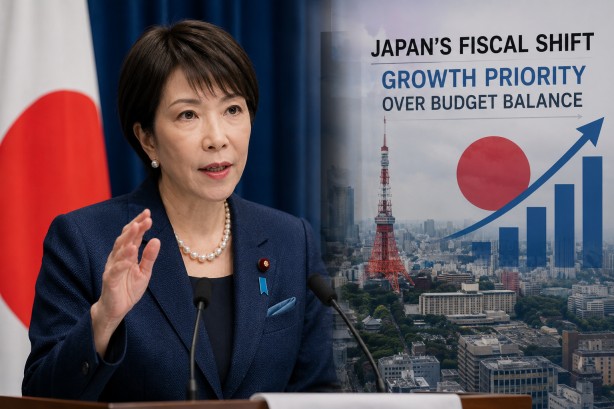
Japan is embarking on a new economic policy direction, marking a departure from its traditional emphasis on fiscal consolidation. The government, under the leadership of Prime Minister Sanae Takaichi, has decided to shift its focus towards economic growth and long-term fiscal sustainability instead of pursuing a one-year primary budget surplus. This strategic pivot aims to gradually lower the public debt-to-GDP ratio, a move supported by plans to channel over ¥370 trillion into public and private investments in key areas such as artificial intelligence by 2040.
Integral to this policy are proposals that include temporary reductions in food consumption taxes and an increase in defense expenditure. However, these initiatives have sparked concerns over their funding strategies. Economists caution that the success of this approach hinges critically on stable economic growth and maintaining low interest rates, both of which remain unpredictable.
The government’s decision marks a significant policy shift, moving away from immediate fiscal targets to a broader, long-term economic vision. This change reflects a growing emphasis on strategic investment and sustainable growth, aligning with global trends in economic policy-making. The focus on strategic sectors like AI underscores a commitment to fostering innovation and future-proofing the economy against global shifts.
Financial markets are expected to keep a close eye on Japan’s forthcoming budgetary choices to evaluate whether the ambitious spending plans can be harmonized with the goal of long-term fiscal stability. The balancing act between stimulating economic growth through increased spending and managing fiscal sustainability will be crucial to the policy’s success.