
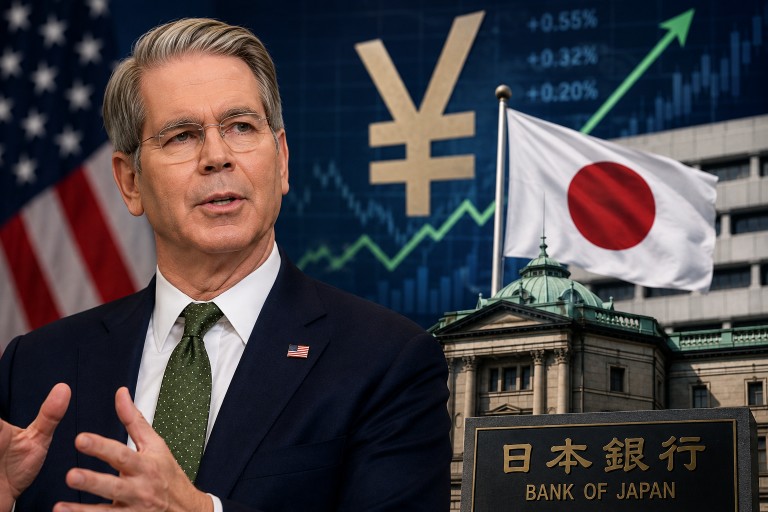
U.S. Treasury Secretary Scott Bessent has thrown his support behind Japan’s efforts to bolster the yen, a stance that aligns with market speculations of a potential interest rate hike by the Bank of Japan (BOJ) during its upcoming policy meeting on September 17-18. Bessent conveyed his views in a discussion with BOJ Governor Kazuo Ueda at the G20 summit for finance ministers and central bank governors held in Asheville, North Carolina. He emphasized that the yen’s current weakness is exacerbating inflationary pressures and underscored the importance of maintaining sound monetary policies and transparent communication to manage inflation expectations and curb excessive currency fluctuations.
The anticipation of another rate increase by the BOJ has been gaining momentum, especially after the central bank’s rate hike in June. Such a move in September could signal a shift toward a more aggressive approach in monetary tightening. The current trajectory of Japan’s interest rates is already reflected in the country’s benchmark 10-year government bond yield, which has climbed above 3% for the first time since 1996. This rise signals both the market’s expectations for stricter monetary policies and concerns over Japan’s fiscal health.
With higher yields, the Japanese government is facing an increased debt-servicing burden, as projected by Finance Ministry estimates that forecast a significant rise in interest payments should borrowing costs continue to remain high. The impact of rising rates is also being felt by households, particularly those holding fixed-rate mortgages, as they encounter higher repayment costs. Nonetheless, these elevated interest rates are offering a silver lining for savers and financial institutions, as they yield better returns on deposits and long-term investments.
The BOJ is thus confronted with the challenging task of striking a balance between bolstering the yen and curbing inflation, all while mitigating the financial strain on households, businesses, and government finances. This delicate balancing act will be crucial in ensuring economic stability amidst the backdrop of evolving monetary dynamics and fiscal challenges.