
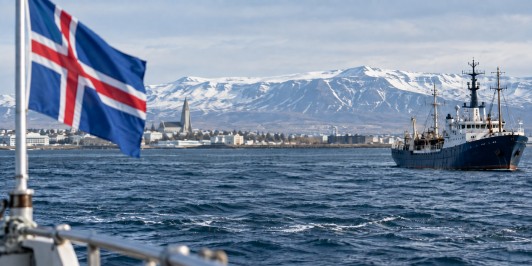
Iceland is on the brink of enacting a permanent ban on commercial whaling, positioning itself to halt an activity that has long been opposed by animal welfare and conservation groups. The government plans to present the legislation to parliament in February, a move that, if passed, will leave Japan and Norway as the last remaining nations engaged in commercial whaling.
The proposed legislation follows a pattern of heated debate over the years, with many citing ethical, environmental, and conservation concerns against the practice. Iceland’s whaling industry has primarily focused on fin whales, a species classified as vulnerable, with a government-approved quota leading to the capture of dozens during the hunting season that spans from June to September.
Animal welfare groups have rallied behind the proposed ban, emphasizing the need to protect whale populations. This legislative push comes despite Iceland’s controversial decision in 2006 to resume commercial whaling, defying the international moratorium established in 1986 to safeguard whales. Norway, which resumed commercial whaling in 1993, and Japan, which exited the International Whaling Commission in 2019 to restart whaling within its waters, would stand alone in continuing this practice if Iceland’s ban is enacted.
While the international moratorium aims to protect whale populations globally, it does not restrict indigenous communities in certain areas, such as parts of Greenland and Alaska, from conducting whale hunts for nutritional, cultural, and traditional purposes. The distinction highlights the ongoing global discourse surrounding whaling and its implications for conservation and cultural practices.