
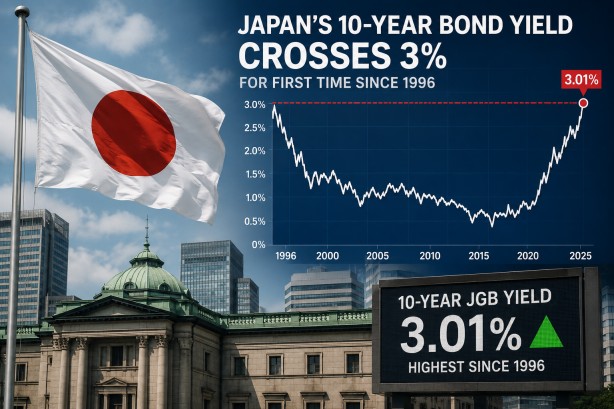
For the first time since 1996, Japan’s 10-year government bond yield has surpassed 3%, signaling a major transformation in the country’s bond market and boosting the attractiveness of domestic fixed-income investments. This development is prompting Japanese investors to reassess their overseas bond holdings, potentially altering the traditional flow of Japanese funds into global debt markets. According to official data, Japanese investors have already experienced a net outflow of ¥3 trillion ($18.7 billion) from international debt markets this year as of August 22.
The increase in domestic bond yields is making Japanese bonds more appealing, especially given that currency-hedging costs are diminishing the returns on foreign investments. A recent survey conducted among 82 Japanese corporate pension funds revealed the strongest net intention to increase domestic bond allocations since the survey’s inception in 2008. This shift is noteworthy for global markets, as Japanese investors have historically been significant purchasers of U.S. Treasuries and other sovereign bonds. A continued decline in their international purchases could contribute to upward pressure on global bond yields and borrowing costs.
The upward trend in Japanese yields is largely driven by concerns over inflation, expectations of further interest rate hikes by the Bank of Japan, and increasing apprehensions about Japan’s fiscal stability. Despite these pressures, analysts suggest that the current movement likely represents a gradual reorientation towards domestic assets rather than an abrupt, large-scale withdrawal from international markets.
The rising appeal of domestic bonds could potentially reshape the investment landscape, as Japanese investors adjust their strategies in response to changing economic conditions. This shift reflects broader market dynamics where local considerations are gaining prominence over foreign investment opportunities. As Japanese yields continue to climb, the balance between domestic and overseas investments may further evolve, impacting global financial markets.