
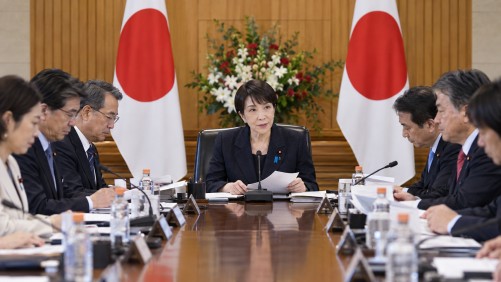
Japanese Prime Minister Sanae Takaichi announced a significant Cabinet reshuffle on September 17, a move that sees several new ministers appointed to positions they had actively sought. This reshuffle marks a departure from the traditional influence of Liberal Democratic Party (LDP) factions in determining government roles, as Takaichi personally evaluated the requests of lawmakers before finalizing her selections.
Among the notable appointments, Hiroshi Nakatsuka of the junior coalition partner Nippon Ishin has become the party’s first Cabinet minister. His inclusion highlights Takaichi’s strategy of fostering a more inclusive government representation. Hisayuki Fujii, appointed as the internal affairs minister, acknowledged discussions with Takaichi regarding his policy priorities, while Goshi Hosono, now reconstruction minister, has been tasked with disaster management responsibilities, including the establishment of a planned Disaster Management Agency.
Key figures retained their posts, with Chief Cabinet Secretary Minoru Kihara, Finance Minister Satsuki Katayama, Defense Minister Shinjiro Koizumi, and Foreign Minister Toshimitsu Motegi continuing in their roles. This continuity suggests a focus on stability in critical areas of governance.
However, the reshuffle has not been without controversy. Kazuo Yana and Yoshihiro Seki, both of whom were previously implicated in a political funding scandal within the LDP, have been appointed as agriculture and education ministers, respectively. These appointments have sparked calls from opposition parties for further clarification regarding their past conduct.
The newly formed Cabinet is set to tackle pressing legislative issues, including a proposed temporary reduction in the consumption tax on food and a bill addressing the number of Lower House seats. These initiatives will be among the key priorities as Takaichi’s government navigates its immediate future.