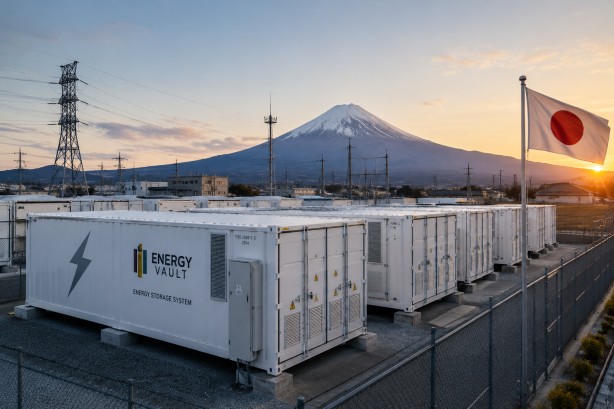
Japan is witnessing a significant surge in its Battery Energy Storage System (BESS) market, driven by the collaborative efforts of international developers, local energy firms, and technology providers who are increasingly investing in large-scale energy storage projects. The rising generation of renewable energy, coupled with challenges like solar power curtailment and grid connection issues, is intensifying demand for standalone battery storage solutions. This expansion is bolstered by supportive government policies, stable revenue frameworks, and growing investments in utility-scale storage infrastructure.
Several high-profile projects are currently in progress, marking a pivotal shift in Japan’s energy landscape. Energy Vault has secured an 850 MW BESS portfolio, while Neoen is advancing a 100 MW/400 MWh battery initiative in Hyogo Prefecture. Meanwhile, domestic giants such as Mitsubishi Estate, Itochu Corporation, and Tokyo Century are actively investing in large-scale storage developments. In Fukuoka Prefecture, PowerX is contributing a substantial 230.1 MWh battery system to one such project.
The momentum in Japan’s energy storage sector is further evidenced by new ventures in regions like Gunma, Niigata, and Kyushu. These projects underscore the growing confidence among industry stakeholders, who are reaping the benefits of government incentives, long-term decarbonization auctions, and policies aimed at enhancing grid reliability and integrating renewable energy more effectively.
Japan’s strategic push towards expanding its solar capacity and its objective to boost the share of renewable energy in electricity generation by 2040 are anticipated to drive further demand for battery storage systems. While lithium-ion batteries remain the predominant choice, Japan is focused on ensuring a competitive battery supply chain while simultaneously strengthening its domestic energy storage capabilities and grid resilience.
Legal Disclaimer: The information contained in this article has been provided by independent third-party contributors, clients, or content partners. We do not independently verify the accuracy, completeness, legality, ownership, licensing, or reliability of submitted content, including text, images, videos, trademarks, or other media materials. The submitting party is solely responsible for ensuring that all content, including images and media assets, complies with applicable copyright, trademark, licensing, and intellectual property laws. We disclaim liability for any unauthorized use of copyrighted or proprietary materials by third parties. If you believe that any content published on this platform infringes your intellectual property rights, kindly contact the author above for prompt review and resolution.