
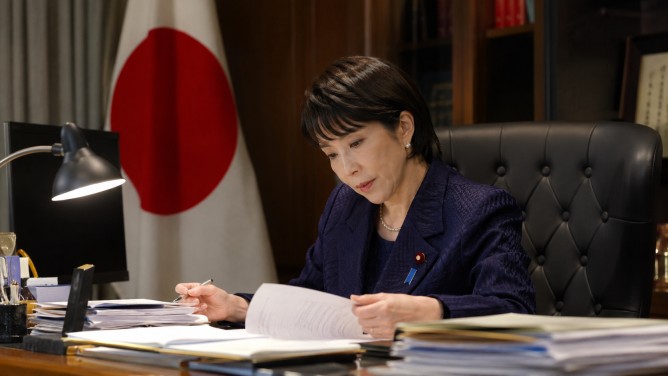
Japanese Prime Minister Sanae Takaichi has sparked public debate after disclosing that she usually sleeps between zero to three hours a night since assuming office in October. Her revelation came via a social media post where she expressed amazement at having recently managed to sleep for five hours, an unusual occurrence for her. Takaichi explained that her late-night hours are often spent poring over government documents and preparing for parliamentary sessions.
Despite her intense work schedule, Takaichi also manages household duties in her personal time, including cooking, cleaning, and laundry. This admission has ignited discussions regarding her leadership approach, with opposition leaders suggesting that effective delegation and prioritizing rest are essential for sound decision-making in a role as demanding as that of a prime minister.
Takaichi has previously championed a strong work ethic and has stated her intention to dedicate herself thoroughly to her responsibilities. Her stance has garnered attention, particularly given her advocacy for relaxing work-hour regulations in Japan, a country already known for its rigorous work culture.
The situation has brought to the forefront broader issues regarding work culture, leadership, and the balance between professional and personal life within Japanese politics. The debate underscores the ongoing conversation about how leaders can best manage their duties while maintaining personal well-being.