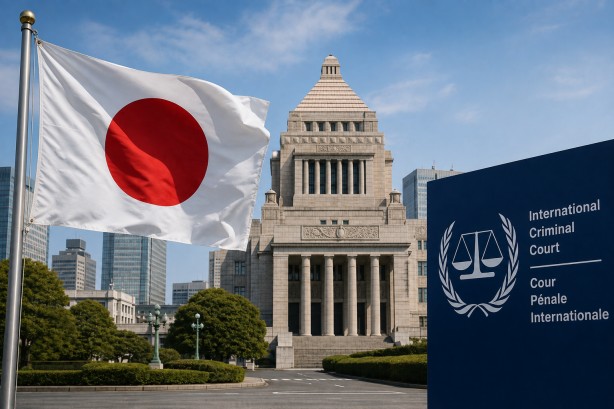
Japan is treading carefully in response to the United States’ decision to impose sanctions on Tomoko Akane, the president of the International Criminal Court (ICC). Prime Minister Sanae Takaichi labeled the sanctions as “very unfortunate” but refrained from directly criticizing the Trump administration. Instead, she emphasized that Japan would maintain discussions with the U.S. and other involved nations. With Japan being the largest financial supporter of the ICC and having contributed significantly in terms of personnel, the country is focused on ensuring that its relationship with its sole treaty ally, the United States, remains unaffected.
Tomoko Akane, a Japanese national and former prosecutor, took on the role of an ICC judge in 2018 and was elected as the court’s president in 2024, marking a historic first for Japan. The U.S. has adopted a more aggressive stance towards the ICC, with President Donald Trump authorizing sanctions against its personnel in February 2025. Further intensifying the situation, U.S. Secretary of State Marco Rubio has indicated Washington’s intentions to undermine the court and rally allies against it.
In light of these developments, Japan chose not to join an international statement condemning the U.S. sanctions, prioritizing its strategic relationship with Washington. This decision faced criticism from Akane herself, who urged Japan to adopt a firmer stance in defense of the ICC and the principles of the rule of law. Despite Japan’s measured public response, the government has consistently voiced its support for both the ICC and Akane.
Earlier this year, Takaichi met Akane during her visit to Japan in January, where she reiterated Tokyo’s ongoing commitment to reinforcing the court’s mission. While Japan navigates this diplomatic tightrope, it is evident that the nation values its contributions to the ICC and the broader international legal framework, even as it seeks to preserve its crucial alliance with the United States.