
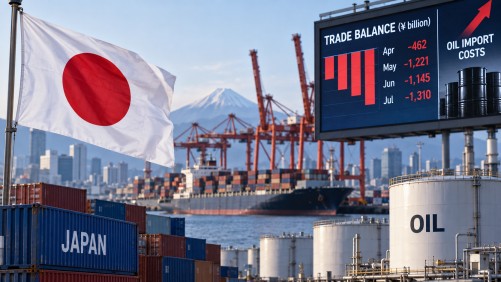
Japan’s trade deficit widened to approximately 1.1 trillion yen ($7 billion) in August, marking a fourth straight month of trade shortfalls as surging oil prices inflated import costs, according to preliminary figures from the Finance Ministry. The deficit highlights the economic strain caused by global energy market disruptions, particularly due to conflicts in the Middle East.
The data reveals a significant 28% increase in imports from the previous year, reaching 11.15 trillion yen ($71.9 billion). This surge was largely driven by rising energy expenses, as geopolitical tensions threatened oil supply chains, notably affecting Japan, which is heavily reliant on imported energy sources.
Despite the challenges, Japan’s export sector showed resilience, with a 19.3% increase to 10 trillion yen ($64.5 billion). Key contributors to this growth were strong exports in the automotive industry and computer chips. Trade with the United States was particularly robust, with exports climbing 24.9% and imports from the US soaring by 55.2%.
Trade with European markets also saw growth, with exports up by 11% and imports rising 20.4%, reflecting a broader trend of increased economic activity. However, Japan’s trade with the Middle East experienced a downturn, with exports declining by 5.2% and imports decreasing by 4.2%, as regional instability continued to affect commerce.
The ongoing disruptions, particularly around the Strait of Hormuz, have exacerbated Japan’s import costs, underscoring the country’s vulnerability to global oil price fluctuations. As energy markets remain volatile, Japan’s trade balance may continue to face pressures in the coming months.