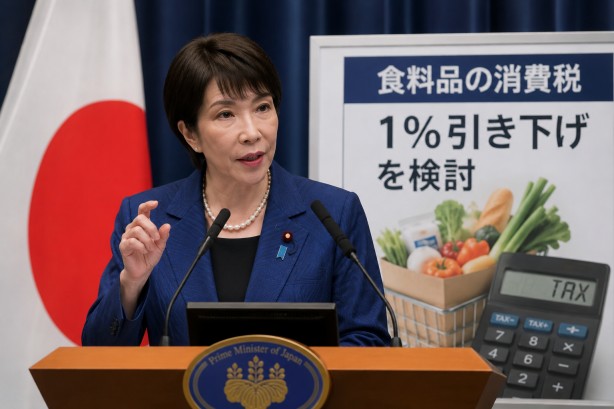
Japanese Prime Minister Sanae Takaichi is set to direct the ruling Liberal Democratic Party to advance a proposal aimed at slashing the consumption tax on food items from 8% to a mere 1%. This tax cut is proposed to be temporary, spanning two years starting April 2027. The initiative comes in the wake of stalled discussions across various parties concerning tax reform, with the government and its coalition partners advocating for both the tax reduction and additional financial support for citizens.
The proposal is part of a broader strategy to alleviate the financial strain on households, especially targeting low- and middle-income families. It includes an estimated ¥600 billion earmarked for financial assistance, designed to further ease their cost-of-living challenges. This dual approach of tax cuts and direct aid is intended to provide immediate relief while maintaining longer-term economic stability.
The government is working towards finalizing this policy by early August. The plan is to introduce the necessary legislative measures during a special parliamentary session later this year, ensuring that the tax cut can be implemented by the following April. This timeline reflects the urgency with which the government is approaching the issue, aiming to provide timely support to those most affected by rising living costs.
This initiative marks a significant step in addressing public concerns about the cost of living, which has been a contentious issue in recent times. By targeting essential food items for tax reduction, the government seeks to make a tangible impact on household budgets, thereby garnering public support and confidence.