
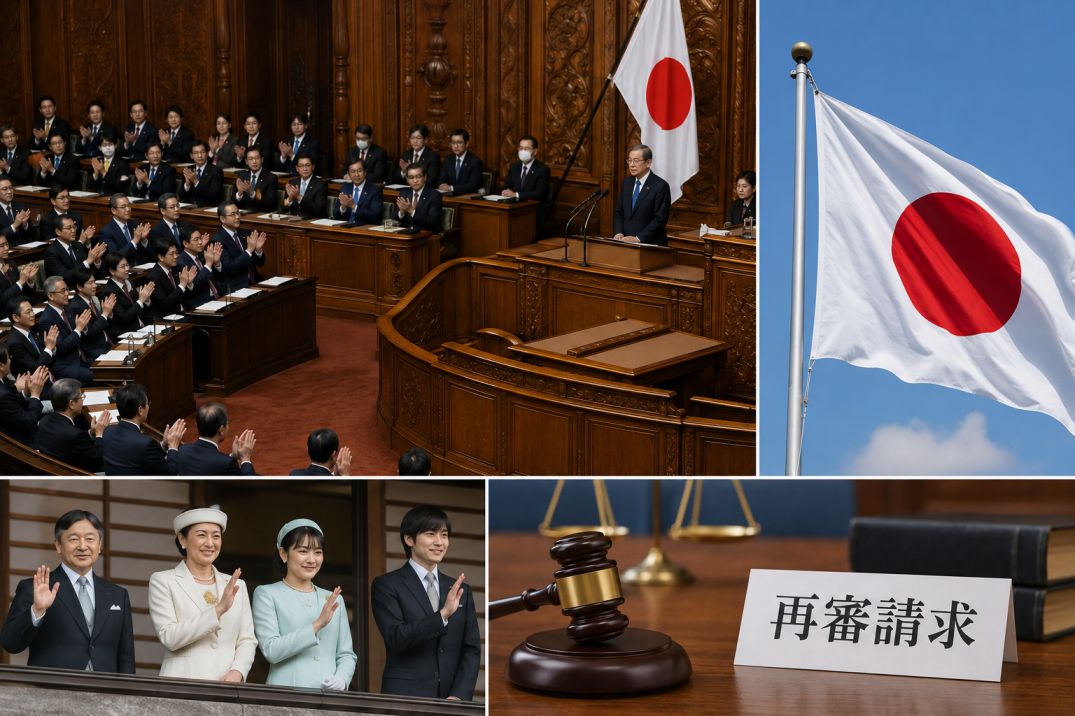
Japan’s parliament has enacted three significant legislative changes, marking a historic shift in the country’s legal landscape. Among them is the first major amendment to the Imperial House Law since 1947, which now allows female imperial family members to maintain their royal status post-marriage. Additionally, it permits the adoption of male descendants from former imperial branch families, a move designed to bolster the imperial succession framework.
In a separate legislative decision, the parliament has made the public desecration of Japan’s national flag a criminal act. Those who commit this offense could face penalties of up to two years in prison or a fine of 200,000 yen. Proponents of the law argue that it serves to protect national symbols, while opponents express concerns over potential impacts on freedom of expression.
Reforms to the criminal retrial process were also approved, aimed at expediting the review of wrongful conviction cases. These changes are intended to address delays that have long plagued the system. Despite this progress, several opposition parties have voiced objections, contending that the reforms fall short of ensuring adequate transparency and comprehensive evidence disclosure.
The legislative package reflects a diverse set of priorities for the Japanese government, balancing traditional values with contemporary legal challenges. The adjustments to the Imperial House Law, in particular, address ongoing debates over the future of Japan’s imperial lineage, while the new flag desecration law underscores a commitment to preserving national honor amid modern societal shifts.
Overall, these legislative changes signal Japan’s efforts to navigate complex social and legal issues, with each law sparking its own discussions about the nation’s direction and values. The implications of these laws will likely be closely monitored both domestically and internationally, as Japan continues to evolve its legal and cultural identity.