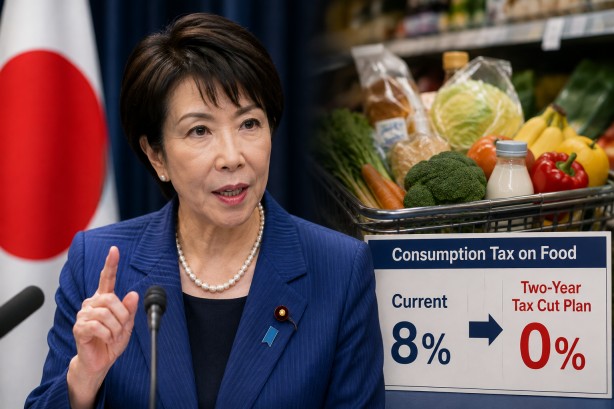
Japanese Prime Minister Sanae Takaichi has put forward a proposal to significantly lower the consumption tax on food, aiming to ease financial burdens on middle- and low-income households. The plan suggests reducing the food tax rate from its current 8% to 1% for a duration of two years, starting in April 2027. This initiative is designed to alleviate cost-of-living pressures, with the remaining tax burden supplemented through income-linked benefits. Takaichi is seeking to secure Cabinet approval for the proposal in the coming week, with hopes for parliamentary passage later this year.
The proposed tax cut is part of a broader strategy to address economic challenges faced by many households in Japan. By effectively nullifying the tax on food, the government aims to provide temporary relief to consumers grappling with rising living expenses. Takaichi has assured that this tax reduction is intended as a temporary measure, pledging that the reduced rate would be in effect only for two years before reverting to its original level.
Despite its potential benefits, the plan has encountered substantial opposition within the ruling Liberal Democratic Party (LDP). Critics have voiced concerns about the financial implications of the proposal, which is estimated to cost around ¥10 trillion ($62.25 billion). A primary point of contention is the absence of a clearly defined funding source to cover this significant expenditure, raising questions about the fiscal sustainability of the initiative.
In addition to financial concerns, some fiscal conservatives within the party have expressed skepticism about the feasibility of reinstating the original tax rate after the temporary reduction period. The challenge of reversing tax cuts once implemented is a common issue in fiscal policy, and opponents fear that the temporary measure could become permanent, further straining government finances.