
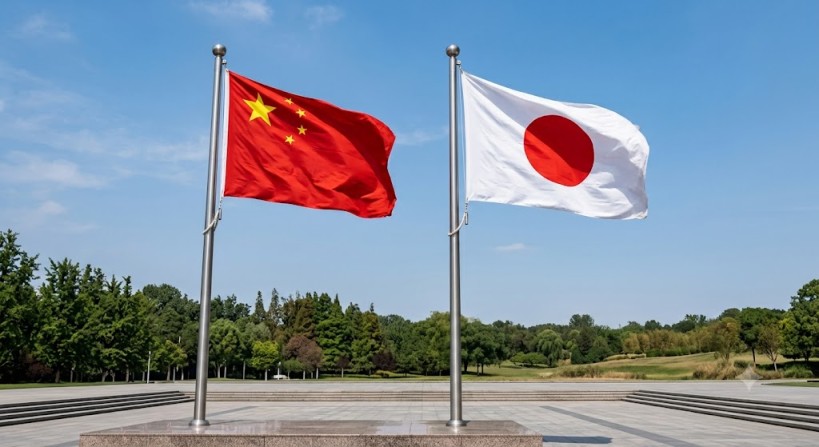
China has imposed new export controls on 40 Japanese entities, citing their involvement in bolstering Japan’s military capabilities and what it describes as efforts towards “remilitarization.” This move includes restrictions on 20 Japanese companies and divisions, specifically targeting units associated with major firms. These entities are now barred from receiving certain dual-use goods—items that can serve both civilian and military purposes—from Chinese and foreign exporters.
In addition to these restrictions, another set of 20 Japanese entities has been placed on a watch list. For these entities, exporters must obtain special approvals, conduct risk assessments, and ensure that the exported products will not be used for military purposes. China justifies these measures as necessary to counteract Japan’s perceived military expansion. Beijing has voiced apprehensions about Japan’s enhanced defense capabilities, particularly in terms of long-range weapons and its increasing security collaborations with other nations.
Japan has responded by criticizing the export controls, labeling them as unacceptable, and has called on China to repeal the measures. Japanese officials have stated that they plan to assess the impact of these restrictions and consider suitable responses. The backdrop to this dispute is a period of heightened tensions between the two countries, following Japan’s recent defense strategy expansion and military capability enhancements. Beijing has frequently opposed Japan’s security initiatives, especially those concerning Taiwan-related matters.
According to analysts, China’s export restrictions appear to function more as a diplomatic signal rather than an extensive economic maneuver, underscoring the fragile state of China-Japan relations amidst broader regional security issues. Despite the specific focus of these measures, the underlying strain between Beijing and Tokyo remains a significant concern, particularly as both nations navigate their roles within the evolving regional security landscape.